When You Cannot Win: The Moral Courage of Making Vulnerability Visible
You’ve felt it before: that moment when speaking up won’t change the outcome, but staying silent would betray your humanity.
This tension lives at the heart of Karbala—not as religious doctrine, but as an enduring question about ethical resistance. And nowhere is it sharper than in the story of an infant named Ali Asghar.
Not a Story of Violence—But of an Appeal
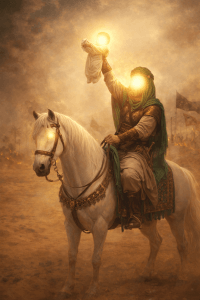
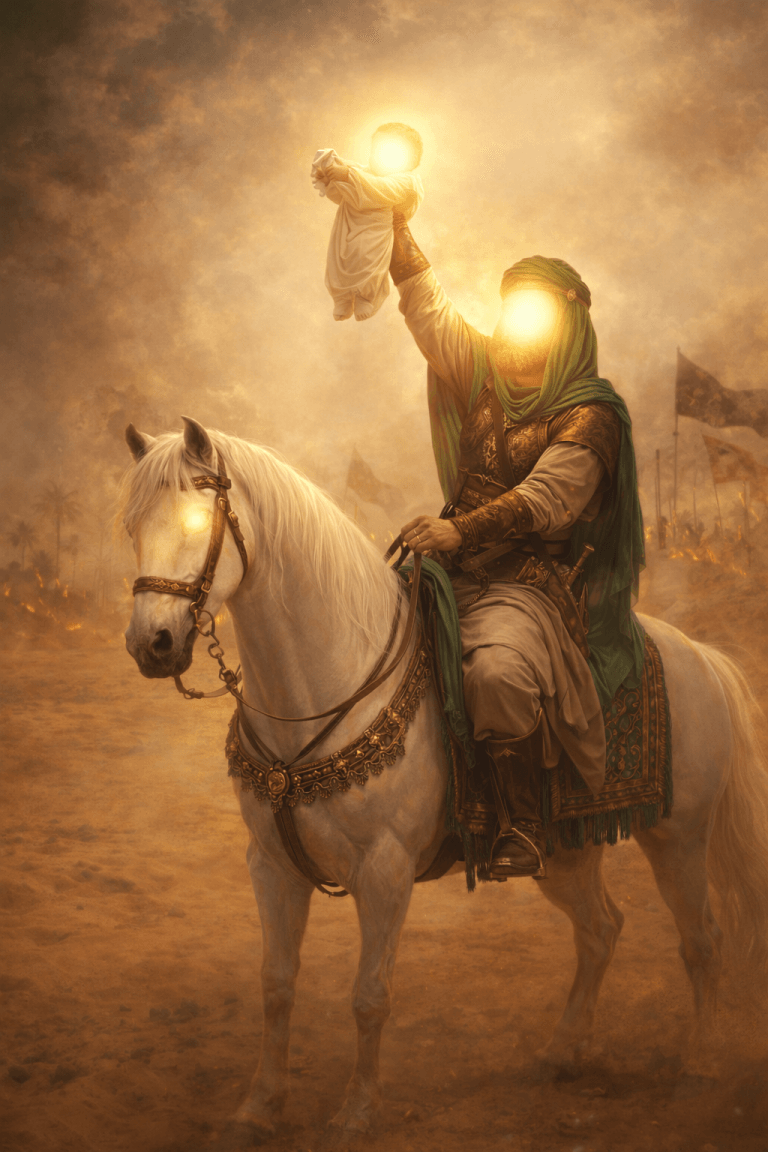
As water ran out on the battlefield, Husayn held up his infant son. Not as a weapon. Not as a threat. But as a final, non-violent appeal:
“Even if you deny us everything else—will you deny compassion to a child?”
This moment isn’t remembered for what happened next. It’s remembered for the gesture itself: an act of moral courage that refused to let power erase our shared humanity.
For Gen Z and younger millennials wrestling with systemic injustice, this resonates deeply. You’ve watched institutions fail the vulnerable. You’ve seen appeals for compassion dismissed as “naive.” You know the exhaustion of speaking truth without guarantees of change [[3]].
Three Layers of Ethical Meaning
Karbala (The Past): Dignity Over Survival
Holding up Ali Asghar was not strategic. It would not secure water. It would not prevent defeat.
It was an act of dignity over survival—choosing to name injustice even when powerless. This is moral courage in its purest form: acting according to your values despite personal risk [[11]].
Modern parallel: The climate activist who testifies before a dismissive legislature. The whistleblower who documents abuse knowing retaliation will follow. The parent who shields a child in a war zone—not to win, but to affirm: This should not be normal.
Mahdism (The Future Horizon): Refusing to Normalize Suffering
Remembering Ali Asghar is itself an act of resistance. It says: We will not let this become ordinary.
This isn’t passive waiting for rescue. It’s the refusal to declare injustice permanent [[3]]. Hope here isn’t naive optimism—it’s the rational stance that history has not closed its moral account.
Without this horizon, Karbala becomes pure tragedy. With it, the appeal remains alive: a challenge to every generation that follows.
The Present: Responsibility Without Guarantees
Today, vulnerability is often hidden. Algorithms bury suffering. Systems reward silence. We’re trained to look away from what we cannot fix.
But ethical resistance asks something different: Where are the quiet appeals happening now?
- The displaced child whose photo vanishes from news cycles
- The worker silenced for naming unsafe conditions
- The community pleading for clean water while corporations profit
Bearing witness isn’t about solving everything. It’s about refusing to let power define what counts as “normal.”
Why This Isn’t Propaganda
I’m not asking you to believe a theological claim. I’m offering a moral idea:
Making vulnerability visible is an act of ethical resistance—not because it guarantees change, but because it refuses to let injustice become invisible.
This framing avoids three pitfalls your audience rightly rejects:
- No guilt-tripping: You aren’t “failing” if you feel powerless. The point is naming the tension—not demanding heroism.
- No end-times rhetoric: This isn’t prophecy. It’s a stance: history remains open to moral accountability.
- No moral superiority: The appeal in Karbala failed in its immediate aim. That’s the point—dignity isn’t transactional.
A Question to Carry Forward
Karbala holds up an infant not to shock us, but to ask:
When someone appeals to your humanity—especially the most vulnerable—do you see a problem to solve… or a truth to honor?
Today, whose quiet appeal are we being asked to witness?
This isn’t about waiting for justice.
It’s about refusing to surrender to injustice.